Record-Breaking Scale: 320,000 m², 2,600+ Exhibitors, 2,000+ New Product Debuts
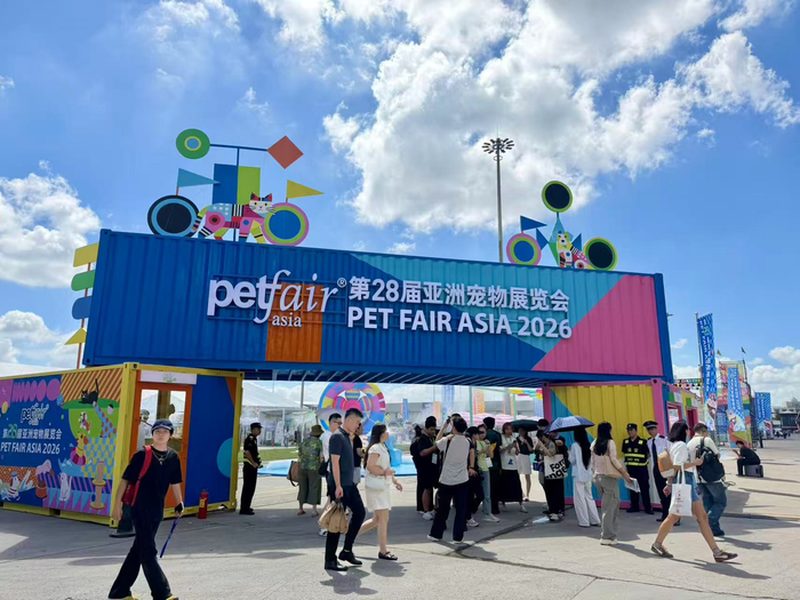
The 28th Pet Fair Asia (Pet Fair Asia 2026) was held from August 19 to 23, 2026 at the Shanghai New International Expo Centre. This year's exhibition covered 320,000 m² across 17 halls, 10 supply chain pavilions, and one outdoor zone, bringing together 2,600+ exhibitors and more than 26,000 brands — a record-breaking scale. The opening day featured the VIP B2B Day (invitation-only for buyers), opening trade matchmaking to professional buyers worldwide; the fair also hosted the 15th Asia Pet CEO Summit, the Pet Medical Conference, and other industry events.
As the largest pet industry event in the Asia-Pacific region, the highlight of this edition was the "Asia Pacific New Product Debut Initiative" — over 2,000 global pet new products made their world premieres, covering pet food, smart hardware, healthcare, travel and outdoor, and human-pet co-living categories. National pavilions from New Zealand, Japan, South Korea, the United States, and Poland returned, with new pavilions from Australia, Canada, and Thailand — a clear sign of the Asia pet market's strong appeal to global brands.
Pet Food Innovations: From "Full" to "Precision Nutrition", Age-Segmented Nutrition Takes Center Stage

The pet food zone at this year's fair showed a clear shift toward "precision." In previous years, the industry competed on basic formulation labels such as "high protein, grain-free, freeze-dried." This year, exhibitors began developing targeted solutions around pet age, health status, and individual differences, making age-segmented nutrition and functional formulations the undisputed protagonists.
- A wave of senior pet foods: XianLang launched a baked complete senior cat food (for cats aged 7+), and products such as crispy-textured senior food for dogs and cats and joint-care formulas increased significantly. Data shows that the number of senior dogs and cats aged 7+ has approached 30 million, about 20% of the total urban pet population — a core growth market that pet food brands are competing to capture.
- High-purity functional ingredients: Dolosh released "Golden Crown 963" krill oil, the first krill oil product in China designed for senior dogs and cats aged 7+, using krill oil with 63% high phospholipid content; its Omega-3 anti-inflammatory staple food controls the Omega-6 to Omega-3 ratio within 5:1, directly addressing pet inflammation and coat health.
- Urinary health and full-lifecycle nutrition: Weishi launched the "Pee Cube" (urinary health) and "SterilCube" (post-neutering full lifecycle) series, further segmenting nutritional solutions by life stage.
- Category expansion into exotic pets: Parrot staple foods are now customized by breed size and nutritional needs, while food zones for exotic pets such as rabbits, hamsters, and reptiles have expanded significantly.
The shift from "competing on formulas" to "competing on precision" reflects the upgrading of pet owner expectations: they are no longer satisfied with the basic promise of "balanced nutrition," but expect every bite to deliver precise answers for their pet's age, size, and health condition. For buyers, this means the sourcing logic should shift from "big and all-around brands" to "factories with professional barriers in niche segments."
AI Pet Care Moves from Concept to Mass Production: Large-Model-Driven Smart Hardware Explodes
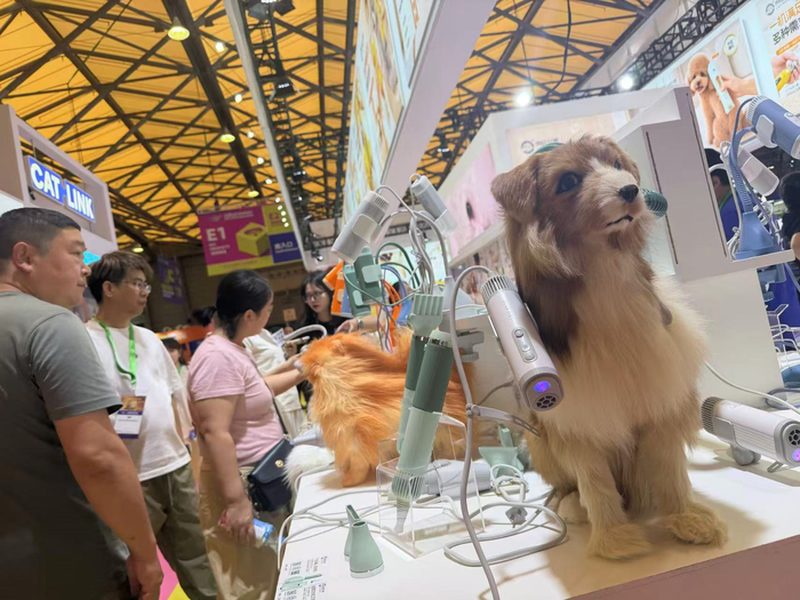
If smart pet products a few years ago were still stuck at the functional level of "automatic feeding and remote monitoring," this year's fair marked the industry's official entry into the AI large-model-driven era — products have evolved from "being automatic" to "being intelligent."
- CATLINK next-generation smart litter box: Equipped with a built-in camera and a VLA (Vision-Language-Action) large model, it forms a closed loop of "see-perceive-understand-prevent," recognizing cat litter box behavior and giving early warnings of health anomalies; the same brand also showcased a smart feeder with facial recognition for precise per-pet feeding.
- MengXiaoYi AI pet translator: Launched by Hangzhou Smart Pet Interaction, the world's first pet-language large-model translator, trained on 5 million+ pet behavior data points, capable of recognizing 20 cat emotions and 10 dog emotions; after its global debut on June 1 this year, 12,000 units sold out within half a month, becoming a phenomenon product.
- Wearable health monitoring: Xingchen Smart Pet's POLARIX smart chest harness monitors heart rate, body temperature, and HRV (heart rate variability) in real time, using AI to assess pet health, mood, and even heatstroke risk; pet walking aids with built-in sensors record rehabilitation exercise data, providing quantified recovery plans for post-operative dogs and cats.
- Systematic smart home ecosystem: Lianchong Smart connects smart water fountains, feeders, and litter boxes into a coordinated system, continuously recording behavior data and generating monthly health reports through large models — pet health status has, for the first time, become "data-driven and visualized."
Behind the explosion of AI pet care lies the dual driver of falling hardware costs and the spillover of large-model capabilities. For cross-border buyers, smart pet hardware is in a window where "products iterate rapidly and channels are not yet consolidated." Chinese supply chain companies with original algorithms and data accumulation capabilities are the partners worth prioritizing.
Pet Healthcare Standardization: Internal & External Deworming, Telemedicine, and Rehabilitation Aids
Pet healthcare was one of the fastest-growing sectors at this year's fair. Elanco made the mainland China debut of its Credelio Plus (fluralaner and moxidectin topical solution), achieving up to 12 weeks of internal and external parasite control with a single dose, solving the traditional pain point of "unsynchronized internal and external deworming"; Ruipai Pet Hospital showcased a three-tier care system of "home health monitoring — AI early warning — remote consultation — offline referral," advancing pet healthcare from point treatments to full-lifecycle health management.
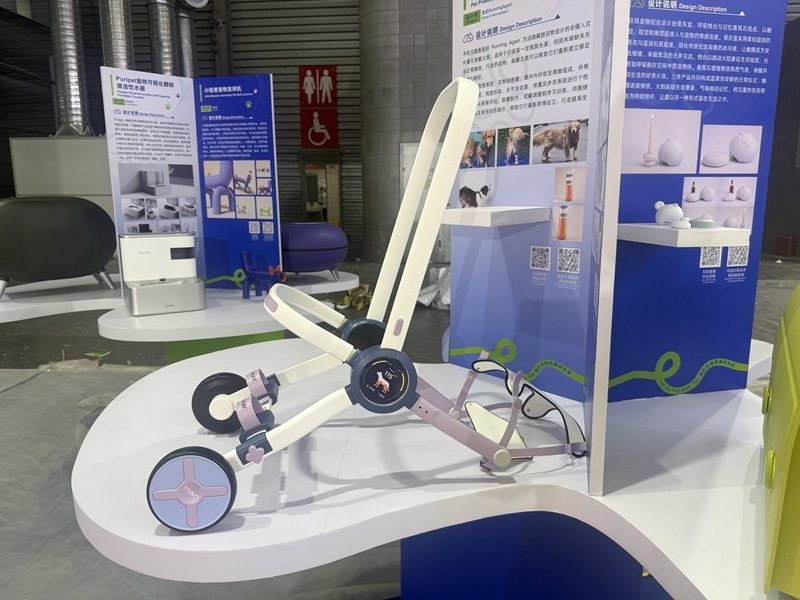
Rehabilitation aids also drew attention: pet walking aids, wheelchairs, and post-operative care boxes are moving from professional medical institutions to the mass market, echoing the rapid growth of the senior pet population. As pet healthcare standardization improves and pet insurance penetration rises (the number of insured users on major platforms has doubled), medical-grade pet products are becoming a new high-margin procurement category.
Human-Pet Co-Living & Mobility: Cross-Industry Giants Enter En Masse
The most visible change at this year's fair was the collective appearance of numerous "giants from outside the industry." BYD brought an in-car pet travel solution that integrates pet safety seats, in-cabin temperature control, and smart monitoring into the automotive ecosystem; Want Want Group extended its food industry supply chain to pet snacks and nutritional products; Ronshen launched a pet food freshness-preserving refrigerator; Dettol released a pet environment disinfection and care product line. The simultaneous entry of giants from four major industries — home appliances, food, automotive, and daily chemicals — marks the pet economy's upgrade from a "vertical track" to "consumer infrastructure."
In travel and co-living products, beberoad launched the T5max pet stroller weighing only 8.5 kg with one-button folding; cycling pet seats fit folding bikes, road bikes, and mountain bikes (load capacity under 25 kg), while tow-behind pet carts target large dogs over 30 kg; for hot-weather travel, some manufacturers launched a three-color early warning system combining a "handheld infrared thermometer + chest harness temperature sensing"; BYCAT's human-pet co-living fitness equipment translates cat running-wheel data through bike flywheel motion, using AI cameras to drive human-pet interactive games, further productizing the "companionship" scenario.
| Trend | Representative Products/Developments | Significance for Buyers |
|---|---|---|
| Precision age-segmented feeding | Senior cat food, crispy-textured food, urinary health formulas, krill oil | Specialized factories in niche segments gain stronger pricing power and repurchase advantage |
| Human-pet homology | Human-grade ingredients, traceable supply chains, clean labels | Factories with food safety certifications become a hard threshold |
| AI + pets | VLA litter box, pet-language large model, smart chest harness | Supply chains with original algorithms + hardware capabilities are in a strategic window |
| Senior pet economy | Senior food, walking aids, rehabilitation aids, medical-grade products | Nearly 30 million pets aged 7+, demand continues to expand |
| Cross-industry giants | BYD, Want Want, Ronshen, Dettol | Industry standards rise, forcing supply chain upgrades |
Beyond the Trends: The Pet Economy Enters the Era of Deepening "Per-Pet Value"

Across the signals released at this year's fair, China's pet economy is undergoing a critical transformation from "scale expansion" to "deepening per-pet value." In 2025, the number of urban dogs and cats surpassed 126 million, and the market size is expected to exceed RMB 405 billion by 2028, maintaining annual growth of around 10% — incremental growth remains significant, but the driver has shifted from "more people keeping pets" to "more spending per pet."
This transformation creates three structural opportunities. First, supply chains are concentrating toward "specialization and certification": human-grade ingredients, clean labels, and traceability systems are moving from differentiators to entry barriers, and mid-to-large factories with complete qualifications will receive more order preference. Second, smart hardware is moving from "single products" to "ecosystems": single-category automatic feeders and litter boxes have entered a red ocean, while system-level products with data linkage and health management capabilities command a significant premium. Third, international sourcing is shifting toward "early involvement": as product iteration accelerates, more overseas brands and retail channels are choosing to collaborate deeply with Chinese supply chains at the product definition stage, rather than simply "placing OEM orders."
Practical Recommendations for Global Buyers
Estroute specializes in Asia cross-border sourcing and supply chain services, helping small and medium offline retailers worldwide connect directly with high-quality suppliers in China, Japan, South Korea, and Southeast Asia. Based on first-hand observations at this year's fair, we offer the following recommendations for pet product buyers:
- For food categories, lock in certified factories first: prioritize factories with FDA/EU registration, HACCP, BRC, or equivalent certifications, and front-load test reports and traceability documents into the product selection stage to avoid compliance rework.
- For smart hardware, look for "algorithm + hardware" dual capability: prioritize companies with in-house algorithm teams and stable production lines, and pay close attention to data compliance (privacy policies) and after-sales support.
- Senior pet and medical aids are a blue ocean: Europe, the US, Japan, and South Korea have mature aging pet-ownership structures, and senior food, rehabilitation aids, and medical-grade products have clear premium potential in overseas markets — small trial orders are a sensible way to validate.
- Leverage professional service providers for factory audits and order follow-up: pet products have many SKUs, complex certifications, and tight delivery cycles; a localized team for supplier audits, quality inspection, and logistics coordination can lower cross-border trial-and-error costs.
For the new product list, supplier directory, or sourcing plans for specific categories from this fair, please contact Estroute. Based on your store positioning and target market, we provide one-stop supply chain support from sample matchmaking to logistics delivery.
Back to News List